


Long-term storage of spare parts and machinery
Corrosion protection for long-term storage
Spare parts, machinery, and metal components can be damaged unnoticed during prolonged storage. Moisture, temperature fluctuations, condensation, and unsuitable packaging can cause corrosion – even if the components were initially stored dry and undamaged.
The situation becomes particularly critical when spare parts are needed again only after months or years. It is often only upon removal that it becomes apparent that the original storage conditions did not provide sufficient protection.
Do you already have components in storage and are unsure whether they are adequately protected? We analyze storage conditions, the component itself, and the corrosion risk, and develop a suitable long-term storage concept.

Damage caused by improper storage
Typical problems include:
- Corrosion: Moisture and oxygen can trigger corrosion processes on metal surfaces. Moisture already trapped in closed packaging can become problematic.
- Condensation: Temperature changes can increase the relative humidity inside packaging and lead to condensation.
- Corrosion in hard-to-reach places: Cavities, gaps and poorly accessible metal surfaces can be particularly critical.
- Functional impairments: Corrosion can impair fits, surfaces and mechanical functions of components.
- Depreciation: Damaged spare parts may need to be refurbished or replaced.
- Delays in repairs: A spare part is available, but due to corrosion damage it can no longer be used immediately.
Suitable for long-term use?
You should ask yourself the following questions:
- Have your spare parts or machines been in storage for an extended period of time?
- Are metal parts stored for months or years?
- Are the components protected only with foil, stretch film, or standard packaging?
- Was the ambient humidity taken into account during packaging.
- Are there significant temperature differences during the storage period?
- Can you control how the moisture develops inside the packaging?
- Is it documented what corrosion protection each component requires?
What does safe long-term storage look like?
Long-term storage requires a coordinated packaging concept. Not every component needs the same protective measures. Key factors include:
- Material and surface of the component
- Dimensions and weight
- Storage period
- Storage location and climatic conditions
- Packaging type
- existing residual moisture
- Transport or handling operations
- Requirements for subsequent removal and reuse
Corpac already offers precisely this approach on its existing website: analysis of component and storage conditions, risk and corrosion assessment, packaging development with test phase, as well as monitoring and documentation.
Long-term protection with Corpac
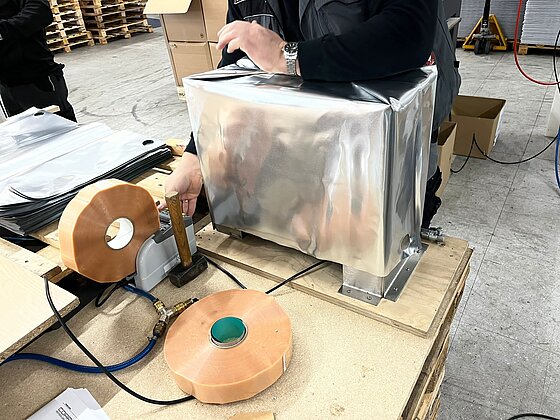
To ensure your products remain safe and ready for use even after months or years, Corpac offers reliable long-term storage solutions:
- Analysis of the component and the storage conditions
- Risk and corrosion assessment
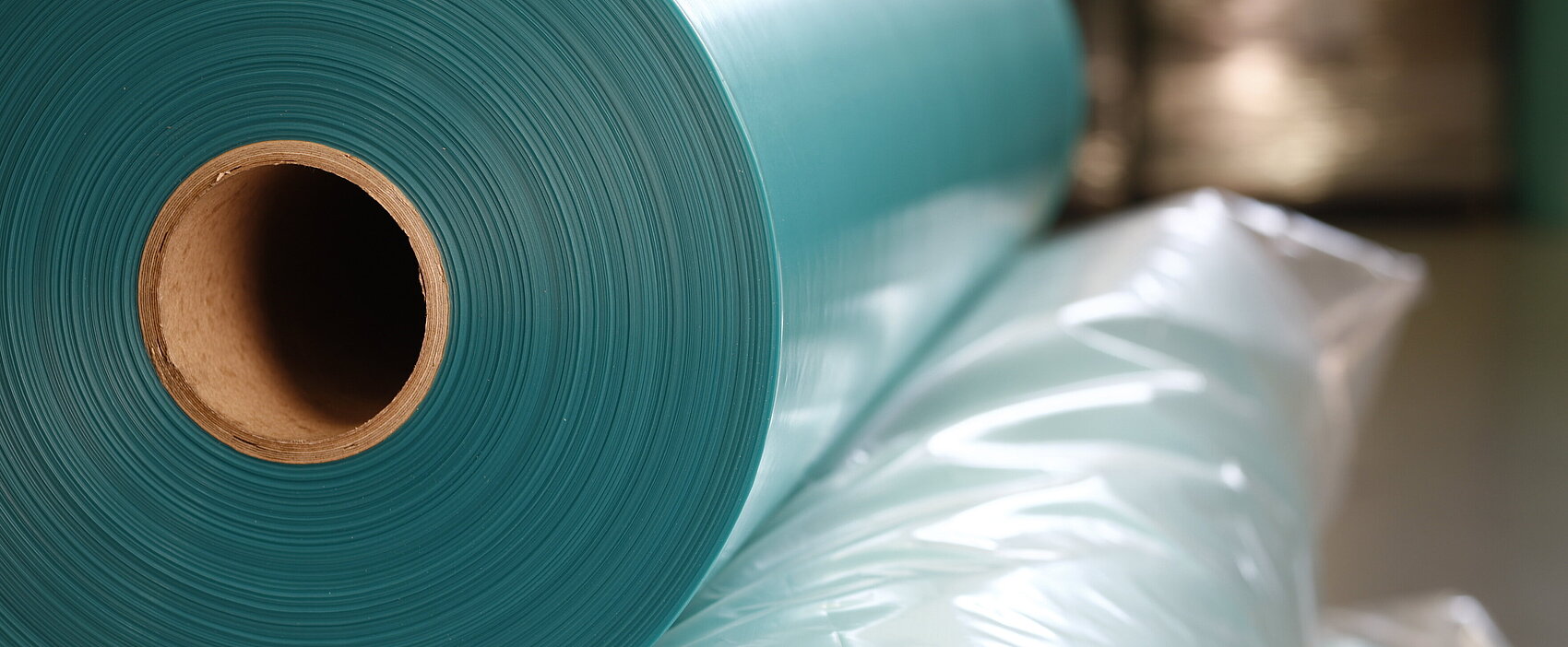
- Packaging development tailored to your component with a test phase: Materials used include: VCI aluminum composite film, desiccant bags, VCI dispensers, humidity control windows, and VCI twin-wall sheets for heavy components.
- Implementation and documentation
- Support with monitoring, release and verification
When could long-term storage be used?
- in strategic spare parts inventory
- at shut-down production lines
- in long-term military storage
- for offshore spare parts
- reserves for critical infrastructure
Are the stored parts showing signs of corrosion?
Have you already stored spare parts, machinery, and metal components and are now noticing corrosion, discoloration, or other changes? Then it's crucial to determine immediately why the corrosion occurred and whether other components are at risk. Possible causes include moisture, condensation, damaged or leaking packaging, incorrectly applied VCI products, or unfavorable storage conditions.
Corpac will help you identify weaknesses in the existing corrosion protection and develop suitable measures for further storage as quickly as possible.


Contact
Corpac Deutschland GmbH & Co. KG
Robert-Bosch-Str. 4
D-71720 Oberstenfeld