



In accordance with the new EU regulation
The new EU Packaging and Packaging Waste Regulation (PPWR) has been in effect since 2025.
It requires companies across Europe to comply with requirements regarding the recyclability, use of recycled materials, and reuse of packaging.
Goals of the PPWR:
- Reduction of packaging waste
- Promotion of the circular economy
- Mandatory recyclability of packaging starting in 2030
Key provisions that affect us at Corpac and our customers:
- Recyclability of packaging
- Minimum recycled content requirements
- Restrictions on hazardous substances
- Labeling and information requirements
- Extended producer responsibility
We would like to address each of these points and provide you with important and detailed information:
1. Recyclability
To ensure that packaging is designed for recycling, the legislation addresses the following points:
- Preference for monomaterial
- No disruptive additives
- Sortable materials
- Recyclable printing inks
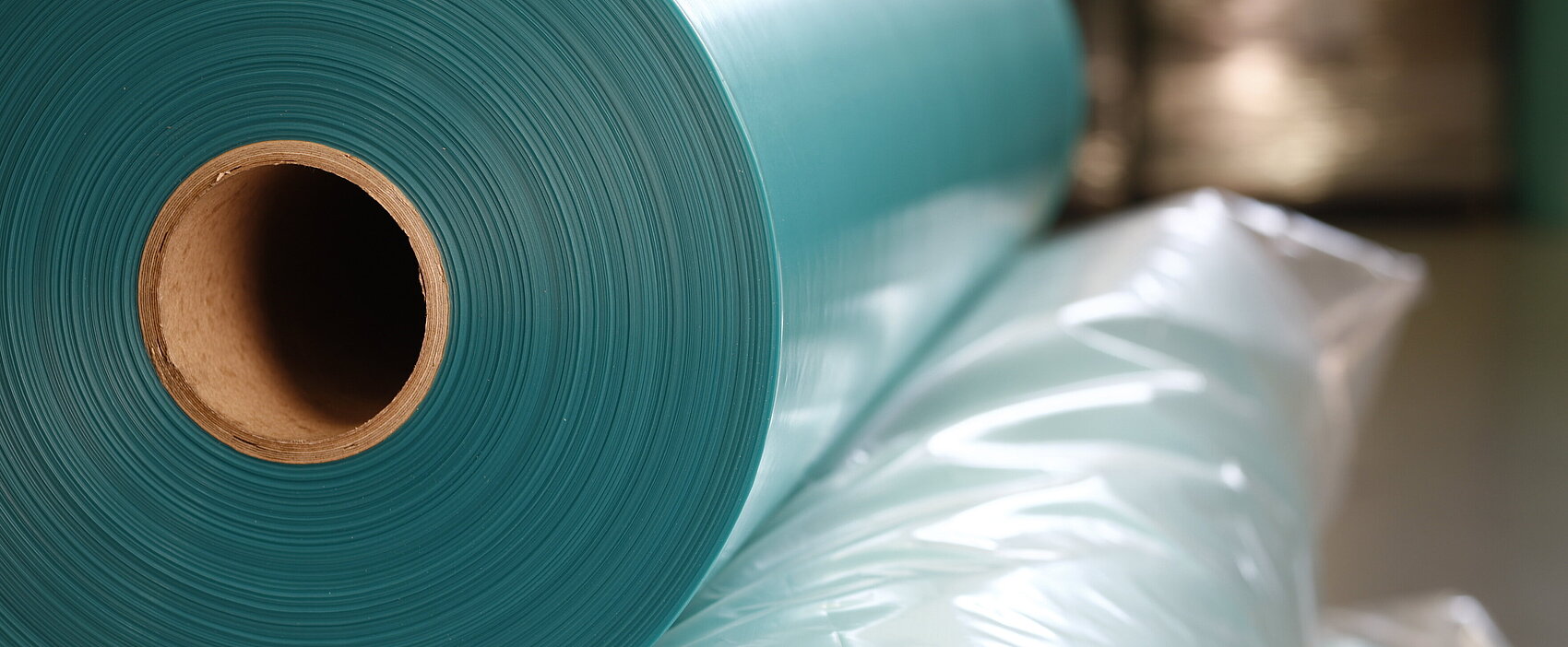
What does “monomaterial” mean in packaging law? When we refer to VCI film in this context, it is important to note that this does not refer to the number of layers in the film. Rather, the polymer family is the decisive factor. Our 3- or 5-layer Corpalin® VCI film consists of PE/PE co-extrusion and is therefore considered a monomaterial. This means it meets the requirements for monomaterial-based plastic packaging and can be processed in existing PE recycling streams.
“Interfering additives” are substances that impair the sorting or recycling process or degrade the quality of the recycled material. What does this mean for VCI films? VCI additives are often discussed because they contain volatile substances and can sometimes cause odors. In practice, however, they are not automatically considered to interfere with recycling, as many recycling facilities process VCI-containing PE films without any problems. Our Corpalin® VCI film is formulated so that the additives used do not impair the mechanical recycling of polyethylene.
The term “sortability” refers to the ability of packaging to be clearly identified and assigned to the correct plastic type in the automated sorting facilities of the recycling system. Only materials that can be reliably identified and separated enter the recycling stream and are thus effectively recyclable. For VCI films, it is therefore crucial that the base material can still be clearly assigned to a polymer family—such as PE. This ensures the film remains sortable in the recycling process. This applies to our Corpalin® VCI film.
“Recyclable printing inks” means that the inks used on packaging do not interfere with the plastic recycling process. For our printed Corpalin® VCI film, we use printing inks that are suitable for the mechanical recycling process of polyethylene. The ink systems used contain no prohibited heavy metals and do not impair the material’s recyclability.
2. Minimum recycled content (PCR)
Starting in 2030, plastic packaging must contain 35% PCR. Many corrosion protection films are used in sensitive applications such as mechanical engineering, the automotive industry, etc. In some cases, PCR can be technically challenging due to:
- Purity
- Odor
- Additive compatibility
- VCI effectiveness
For this reason, the EU is currently considering exemptions for certain applications. Our VCI films are generally suitable for the use of recycled material. In some selected projects, we have already achieved the PPWR recycled content requirement of 35%. Our research and development activities are focused on gradually integrating future PPWR recycled content requirements into our products within the limits of technical feasibility.
3. Restrictions on Hazardous Substances
As a manufacturer of VCI films, the material restrictions under the Packaging and Packaging Waste Regulation (EU) 2025/40 primarily affect us through the raw materials and additives we use. This means that Corpac must ensure and document that our Corpalin® VCI film does not contain any prohibited or strictly restricted substances. Our VCI films meet the requirements of European chemical and packaging regulations. The raw materials used comply with the provisions of the REACH Regulation and contain no prohibited heavy metals or restricted substances as defined by the EU Packaging and Packaging Waste Regulation (PPWR).
4. Labeling and Information Requirements
The main focus here is on ensuring that packaging is labeled in such a way that the material, recyclability, and disposal method are clearly identifiable. This is intended to help both sorting facilities and users correctly classify the packaging. Material labeling: Plastic packaging must bear a material identification in the future. Corpac already uses the familiar recycling triangle PE-LD 04 for labeling. Sorting and disposal instructions: The specific design is still to be determined by the EU. Digital labeling: This is still voluntary and could include, for example, a QR code or a digital product passport.
5. Extended Producer Responsibility
It is important to note that the party placing packaging on the market is responsible for paying for its collection, recycling, and disposal. In many cases, it is not us at Corpac who are the party placing the packaging on the market, but you, the customer. We are happy to assist you with a Packaging Compliance Statement that includes the following points:
- Material composition
- Mono-material structure
- Recyclability
- Material labeling
- Substance compliance
Contact
Corpac Deutschland GmbH & Co. KG
Robert-Bosch-Str. 4
D-71720 Oberstenfeld